

|
The Museum of Menstruation and Women's
Health
Letters, etc. to your MUM
Men??
A woman writes,
I
don't really remember this, as I
was only maybe 4 years old, but it
got brought up a few times around
the age when I was learning about
menstruation. One time, I walked
in on my mother on the toilet, and
asked her, what are you doing? She
replied, I'm menstruating.
Confused, I asked, what does that
mean? She told me that it is
something only women do. I
answered with, well if only women
do it, shouldn't it be called
womenstruating? [More funny stuff.]
January
2012
..........................................................................................................................
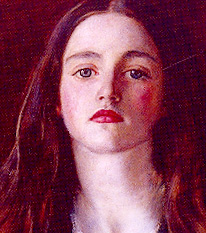
13-year-old Sophy, Effie's sister,
by John Millais from the book.
25 years later she starved herself
to death.
Death by starvation! The most
famous art critic! The most
famous artist! Not consummating
a marriage! Scandalous
"divorce"! Consummating
a marriage! Pubic hair!
And, um , menstruation!?
Wow, this book has everything for
beach reading!
Effie by Suzanne Cooper
(St. Martin's Press)
I know you've never wondered why
19th-century England's most famous
art critic never, um, consummated
his marriage to the much younger
Effie Gray. He had been nuts
about her! But about their
wedding night she wrote that "her
person" disgusted him, the
beginning of a terrible "marriage"
that never was. Later, at the
beginning of the scandal, judges
and doctors ruled that the union
was never legal since there was
never sexual intercourse (they
checked).
Effie was then free to marry
England's future most famous
artist, John Millais, later Sir
John and president of the Royal
Academy of Arts. But in British
society's eyes, "divorced" Effie
was a fallen woman.
The critic, John Ruskin, later
lost his mind after he failed to
wed much younger Rose la Touche;
her parents thought he was weird.
A certain set has always wondered
what happened on that first
wedding night. Had Ruskin never
seen pubic hair on a woman? His
world of art avoided showing it.
Biographer Cooper suggests instead
that Effie's menstruation might
have disgusted him - but forever?
(Now you see the tenuous
connection to this Web site.)
I wonder if Ruskin liked slender
girls' bodies but women's curvier
ones lost his attention. Both
Effie and Rose were very young
when he first saw them.
Oh, the death by starvation:
Effie's stunning sister Sophy,
canonized in an included oil
portrait by Sir John (above),
slowly killed herself by not
eating - anorexia. A horrifying
story about women's exclusion from
the world of work, manic piano
playing - and a gazing (and maybe
more) artist. (I'm one,
too.)
Going back back to Ruskin's
unhappy attraction to girls and
young women (which he shared with
his friend Lewis Carroll): German
genius man-about-the-universe
Johann Wolfgang von Goethe
succumbed to the beauty and wit of
18-year-old Baroness Ulrike von
Levetzow and composed his great
Marienbad Elegy right after her
proxy rejected his marriage
proposal. He was 73. "To me is
all, I to myself am lost."
Remember to wear sunscreen!
Can a woman synchronize with a,
um, GOAT?? (letter)
I have a weird synchronization
experience to share. I've tried
Googling to see if it has
happened to others, but no luck.
It could all just be an
interesting coincidence, but
nonetheless:
My cycles are usually pretty
reliably 28 days long.
Occasionally when I move
someplace new, with new
roommates, there is a period of
adjustment, but it always
settles back to 28 days, on
average. In June (four and a
half months ago) I started
working at a goat farm. Goats
start going into heat when the
weather starts to cool down at
the end of the summer. They
typically are on 21 day cycles,
with 3 days of estrus followed
by 18 "off" days. Starting in
July, my cycles have been very
noticeably shorter than usual...
an average of 21 days long, in
fact. And the average is not
being pulled down by one
freakishly short cycle, either.
My last 6 cycles have been 19,
18, 19, 27, 17, and 22 days
long, respectively. I have
never, in my 15 years of
menstruating, experienced such a
consistent stretch of
abnormal-length periods. I have
no idea whether goat pheromones
could actually affect humans, or
whether this is all a
coincidence. Having a three week
cycle does, however, make me
much less eager to continue
working with goats.
October 2010
Read what your MUM has about
menstrual
synchrony.
"I was adopted into an
all-female household where the
other women were ashamed and
terrified of their bodies"
Mr. Finley -
I first found your website what
must have been a decade ago
searching for women's health
info online as a teenager, and
was instantly captivated. I was
adopted into an all-female
household where the other women
were ashamed and terrified of
their bodies and while that was
never my perspective, it also
meant that I was phenominally
ignorant of other attitudes
towards womens health. The women
of my genetic family all
suffered from severe
endometriosis and menstrual
problems associated with that,
but my legal family was so
uptight about the subject that
they never believed me when I
said I needed help. Your
website was profoundly eye
opening in how it shed light
on cultural attitudes towards
menstruation, and I can credit
it with giving me the courage
and knowledge to start taking
control of my own health and
seek out other nonjudgmental
perspectives on women's
health.
Plus, it is really funny and
fun, these days now that I'm
healthy and much better balanced
I share your website with my
friends, and we all love the
history and cultural attitudes
discussed, so many of which seem
wild and exotic from our
perspective.
I also have something to
contribute, in the probably
unlikely chance you haven't seen
this before - I hadn't visited
your site in a long while but
was reminded of it when I saw
Kotex's recent self-aware
advertising, which is a great
contrast to typically oblique
American descriptions of
menstrual products. There was an
article from them describing how
they were unable to use the
word "vagina" in their
advertisements because TV
networks blocked it, and had
to switch it for "down there".
They have a whole list of youtube
videos now, including
responses from customers
voicing similar frustrations,
I thought it might be a cool
resource for MUM to link to:
http://www.youtube.com/watch?v=FRf35wCmzWw
http://www.youtube.com/user/kc10ubykot
Thanks for all your hard work,
you truly have one of the best
and bravest presences the web
has to offer,
****
July 2010
She finds
fault with this site's
portrayal of menstrual seclusion
in India & with the
relationship between underwear
and menstrual-flow containment.
Readers, draw your own
conclusions and read my comments
at the end of the letter.
I just read your conclusion
about what happens when women in
India menstruate. It is written
from a Western
analysis, that of Dr. Margaret
Greene. It is assumed that
they are shunned and feel
powerless because a Westerner is
looking in on an alien custom
and putting her own spin on it.
I have made the same mistake,
even in my own family.
Firstly, I think the main
assumption throughout your
website is in error that the
use, or not, of undergarments
indicates the use, or not, of
menstrual padding - however, the
use of undergarments has nothing
to do with the use of menstrual
pads. My late great-aunts, born
in the 1880s, wore no underwear
in their Appalachian youth, yet
they made use of homemade
menstrual pads made from clean
batts of spinnable fiber as
their grandmother had shown them
- everyone had a spinning wheel
or spindle, so they also had
spinning materials of some sort.
Spindle weights have been found
in the ruins of Sumer. Do you
think the women spinning the
soft, absorbent fiber did not
think to use it for the obvious
usage so they could get on with
their daily work?
But back to India - have you
ever spoken to an Indian woman
about her menstrual time? I
have. I admit that I expected
her to have felt exiled from her
family when she began
menstruating as a child. But it
was the exact opposite. Once a
month, she went to a separate
building behind her house. It
was outfitted with a feminine
eye with the things the women of
the household would need -
pallets with cushions,
comfortable blankets, and
netting, books, some hobbies,
and a pottery "pottie." No one
expected her to do her regular
chores, because she could not
mend, cook or clean for the
males of the house. But most
important, it came with
one-on-one access to her
grandmother. Only women who were
no longer menstruating would be
able to come and go, so her
grandmother brought her food and
slept with her and told her
stories. She learned the old
songs and poems from her
grandmother, as well as advanced
handicraft skills and life
lessons. It was the greatest,
most special time of her life.
Her family had been so poor
that she went hungry many times
growing up, and had rickets as a
child - still has the bent legs
to show for it. Yet her
grandmother taught her to make
washable pads of the cotton
batts that all Indian households
have - spinning one's own cotton
is a matter of national pride
and all Indian men and women are
expected to learn the skill. The
menstrual supplies were kept in
the women's hut, so men never
saw them. And they would never
consider speaking of the topic
to a man. [Read about an Indian
woman's project to make
washable for the poor in her
area.]
I didn't start out to ask my
Indian friend about
menstruation. I sensed a longing
in her sometimes, so one day I
asked her what she missed most
about India - and this was what
that was. She no longer had a
"break" from everyday life, a
time just for her. She missed it
greatly.
I hope this helps. It really
bothers me when generalizations
are given with authority, made
from assumptions. [Generalizing
from the conversation of one -
one - of the hundreds of
millions of Indian women is
questionable.]
[She later sent this:]
I just read your conclusion that
women "did nothing" when
menstruating, leaving "a trail
of blood behind them." [Um,
that's the statement of the two
German women who wrote a book
about this very topic; read this page
more carefully.] Evidently you
haven't spoken to women about
this, or the women you've spoken
to either don't know or feel
free to discuss this topic with
you. [Read my comments below.
This letter is too good to be
true but typical.] It is common
for people who spin fibers to
use those same fibers when
menstruating. There are even
writings about how to bundle the
fiber for best effect. Whether
sheeps wool, cotton, flax, or
hemp, the soft, absorbent, clean
batts were placed in cheesecloth
or other light, loosely woven
coverings and tied on. Some
women were even "famous" among
their peers for being able to
hold the pad in place without
tying it.
In some primitive and hunting
societies, soft, clean,
absorbent rabbit fur was used,
also tied in place.
To make a definite statement
based on assumption simply
because you can find no one who
will tell you something is
irresponsible. [Wow, talk about
jumping to conclusions!]
For more information on this
subject, you can consult
original printed
spinning/knitting instructions
and their reprints, antique
diaries, and author Jean Auel.
I hope you will soon change the
information on this topic. It is
patently absurd to assume that a
woman would choose to leave a
trail of blood that she would
only have to continually clean
up. She had enough to do without
making more work for herself.
Sincerely,
****
[In general, the American
women I've talked to and whose
email to me I've read - yes,
that's more than one woman -
are horrified by the thought
of bleeding into their
clothing and deny that anyone
has done it intentionally. Yet
there is much
evidence that this
happened in Europe and
undoubtedly in America and
elsewhere. When my MUM
museum was open in my
house more than one woman told
me they or an acquaintance
used no pad or tampon or cup
or anything but just let it
flow. The letter writer should
talk to more of her fellow
Americans. What discoveries
she'll make! I would say
Americans (I'm an American)
along with Japanese top the
list of those extremely
conscious of bodily
cleanliness (are there other
groups?), helped along by the
mammoth personal hygiene
industry. Many people find it
hard to escape their cultures
just like the woman writer of
this letter.]
Artists
wanted
"Metropolis TV," a documentary
show that airs on Dutch public
television, is working on a
program about global attitudes
toward menstruation. The
show is produced by the VPRO, a
progressive network that often
collaborates with BBC and PBS.
For the US section of the
documentary, correspondents Kel
O'Neill and Eline Jongsma are
looking to profile
East Coast artists who
incorporate menstrual blood into
their paintings, performances or
sculptures. If you are an
artist, and want the opportunity
to share your work and
philosophy with a global
audience, contact Eline Jongsma:
elinejongsma
(at) yahoo (dot) com.
About "Metropolis TV"
(www.metropolisweb.tv) "Metropolis
TV" is an award-winning show
featuring items from a global
collective of video journalists
and filmmakers. "Metropolis"
correspondents make video reports
from where they live on a variety
of issues and themes. The show's
correspondent network consists of
over 50 documentary filmmakers
from all over the world. In each
episode, we make a trip around the
globe and bring viewers a
collection of short stories, all
grouped around a weekly theme.
From obesity and the lives of
fifteen year old girls, to traffic
jams, outcasts and Elvis
impersonators, we present to you
one new global view every week. By
comparing these stories from all
over the world we will discover
surprising differences and
similarities between people and
cultures worldwide.
"Metropolis TV" is currently
airing in The Netherlands, Greece,
Iraq, and Nicaragua. Reports are
also available worldwide on the
website, which recently won a
special commendation from at the
2009 Prix Europa Awards.
July 2010
Pads for
prisons, help for women in
Sudan, etc.
Hello
Harry,
I have just discovered your
amazing website and am listening
to the interiew on Keeper.com
[on the homepage, mum.org]
I have no idea if you are still
interested in this subject but I
thought I'd email you to tell
you about my project.
I am a justice consultant in
Canada, involved in a prison
reform project in Southern
Sudan. Women everywhere in poor
countries but especially in
prison do not have access to
pads. We started a pads for
prisons project (at
http://sites.google.com/site/padsforprison/
) and have now got a
successful thing going, but I
have been so curious about the
history of pads and menstruation
and have been talking to women
everywhere about their periods,
about what their mothers and
grandmother's did.
My own
father recently told me he
used to soften paper with his
hands as a child for his
mother.
Sudanese
girls sit on ash and paper for
the duration of their periods.
Some
women in Kenya use clay to put
up their vaginas. Many Indian
women used folded old cotton
sari material. It goes
on and on. Mostly cultures are
negative about periods and
muslims are so far the worst in
terms of considering women
"dirty" when they have their
periods, but African tribes are
not much different.
Anyway, you must know all this
but, from my pads project, I have now
developed a lifeskills
(including sewing cloth pads),
health education, and
leadership workshop for women
because it's all linked.
Attitudes towards women are
somewhat related to their
function and role in society and
so much of the attitudes are
based on taboo and lack of
knowledge about the female
anatomy and the whole
menstruation cycle and
reproductive health of women.
Last month I ran two workshops
in Southern Sudan and made alot
of progress in this regard. So
much of the success of the
workshops was due to our ability
to discuss women's health issues
including menstruation. [See
Indian projects in Rajasthan
& Uttar
Pradesh.]
Thanks
for your work and time. You
are doing women everywhere a
big favour.
Vivienne Chin
Project Coordinator
International Centre for
Criminal Law Reform and Criminal
Justice Policy
1822 East Mall, Vancouver
British Columbia V6T 1Z1,
Canadatel:
+1.604.859.6640
Period
calculator
Dear Mr. Finley,
I am a high school student
living in Monaco who is learning
how to use php+css.
I decided to create a little
calculator to keep track of my
period. I liked the tool and
thought I'd put it up online:
I created the tool and my friend
**** helped me put it up online.
There are similar tools like
this online but none of them offer
the ability to integrate with your
day-to-day calendar application
like Google Calendar, MS Outlook
Calendar, iCal etc.
I was wondering if I could get a
link to it from your website? I'm
hoping that you will agree with my
slightly biased view of it being
useful and relevant to MUM.
Regards,
****
|
Beautiful
book of paintings & text to
illustrate words and expressions
for menstruation
published in connection with the
Dutch exhibition called
Menstrual
Hygiene for Girls and Women in
Developing Countries
(Menstruele
Hygiene voor Meisjes en Vrouen
in Ontwikkelungslanden),
February, 2009, in the town hall
of the city of The Hague (Den
Haag),
the capital of the Netherlands.
Varina Tjon
A Ten, former member of
the Dutch Paliament and born in
Suriname, created the exhibition
and book.
Book information: KIT Publishers,
Amsterdam, ISBN 978 94 6022 022 7
|
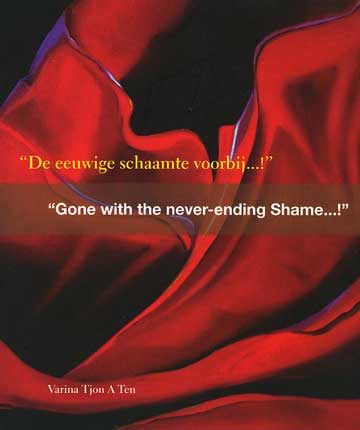 |
The
soft-cover,
83-page book
measures 6 5/16
x 7 1/2" (16 x
19 cm). See 2
pages below. Scroll down to buy the book.
Joke Meijer
created the
cover oil
painting
illustrating Het rode roosje bloet, a Dutch expression meaning
The
red
rose is
blooming again.
A
frequent
Dutch
contributor to this museum generously sent me the book and wrote
much more
information in
the e-mail below the 3rd image.
Can you
imagine a government building in the U.S.A. holding an
exhibit about
menstruation
without special
security to warn
visitors about
horrifying
images and
information
about that
secret thing
called menst--,
oh, I can't
mention it.
But government
buildings in at
least Germany,
Norway
and here in the
Netherlands have
done just that.
And of course I
had a museum of
menstruation in
my non-government
house for
four years.
And the woman
who wrote the
book is a former
member of the
Dutch
parliament. Can
you imagine a
former member of
the U.S.
Congress writing
about
menstruation?
|
|
|
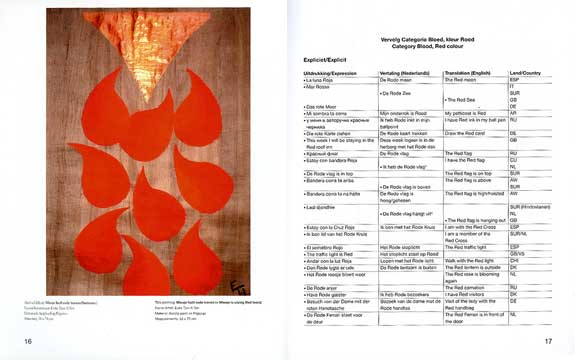
Below:
Because it's my favorite painting
I picked facing pages 16 & 17,
typical of the format. Evita Tjon
A Ten painted it on Egyptian papyrus,
from which menstrual pads can be
made. If the artist's name sounds
familiar, well, it's the author's
daughter, one of many artists
reproduced here.
It illustrates the Dutch expression
Meisje huilt rode tranen (Girl is crying
red tears).
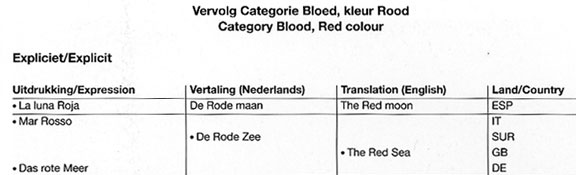
The facing
text page is one of many
showing words and expressions
from many countries (excerpt lies
below).
|
|
|
|
The book's donor sent this
information
with the book:
The author, Dr. Varina Tjon A
Ten, has sampled from several
countries about how menstruation
is named. She is the woman who
founded the Stichting Vrouw en
Verband (Foundation Woman and
Bandage). The
aim is to provide the Third
World with cheap sanitary
protection for the (young)
women because that aspect of
development is neglected.
Read her background paper (pdf)
about menstrual hygiene: Menstrual
Hygiene: A Neglected Condition
for the Achievement of Several
Millennium Development Goals
at http://www.eepa.be/wcm/dmdocuments/BGpaper_Menstrual-Hygiene.pdf
In Februar 2009, more than one
year ago, she
organised an exhibition in the
town hall of the city of The
Hague (Den Haag), the
city in which our government is
housed (your Washington DC). She
asked several painters and so on
to produce one or two paintings
etc. with the theme
menstruation. After the
exhibition the paintings were
sold at an auction to raise
money for the
Stichting/Foundation. All the
paintings are printed in the
book I sent you. See on youtube
an impression of the exhibition:
http://www.youtube.com/watch?v=ebHm_ypR5Hw
or type: "vrouw en verband"
She is promoting the same issue
as here Libresse and Oxfam in
Soedan: see
http://www.libresse.nl/Pages/ContentCategory/Article.aspx?id=42827&resID=57597
and also you have paid several
times attention to that theme.
Her book is only sold by her
Stichting/Foundation. The price of
the book including the
postage costs to send it to
the U.S.A. is 14.00 euro.
(It costs 12.50 euro, including
postage, for the Netherlands).
To transfer
the money to a foreign
bank account people need to have a
BiC code and an IBAN number.
BiC code: ABNANL2A
IBAN: NL82ABNA0553345672
ABN AMRO: 55.33.45.672
Order the book from this
address in the Netherlands:
Stichting Vrouw & Verband
p/a Van Beeckstraat 5
2722 BB Zoetermeer
The Netherlands
|
See related
information on this
Web site:
Washable
menstrual pads for women in
Almora,
Uttar Pradesh state,
India, giving them more
freedom
Teaching
girls about puberty,
menstruation and
how to make washable menstrual
pads, in rural India
Menstrual
Hygiene and Management in
Developing Countries:
Taking Stock, November 2004,
report by Sowmyaa Bharadwaj and
Archana Patkar
Festival,
menstruation, announcement, 1988,
Germany
Norwegian
exhibit about menstruation
& the company history
of the Scandinavian tampon and
menstrual pad company
SCA Mølnlycke
Words and
expressions about
menstruation
Art of
menstruation (and awesome ancient
art of menstruation)
|
Lara Freidenfelds, Ph.D.,
reviews a recent book (more
about Dr. Freidenfelds):
Flow:
The Cultural Story of
Menstruation,
by Elissa Stein and Susan Kim, is
a gorgeous book, from its
beautiful, bold cover, to its
elegant, modern design elements
throughout, to the full-color
images spread liberally through
its pages. The images, most of
which are reproductions of
menstrual product advertisements
from the 1920s through the 2000s,
are the best part of the book.
They do not just help tell the
story, or illustrate the authors'
points; they can be read for their
own narrative, and analyzed as
rich documents in women's history
and advertising history. While
there are several other books
about the history of menstrual
products and practices, none have
been produced nearly so lavishly,
so Flow is a unique
resource.
Stein and Kim look at the history
and current cultural status of
menstruation by way of a number of
fascinating topics, including
hysteria and PMS, vibrators,
douche advertising, menstrual
education and menopause. In their
analysis, they are attempting to
represent a kind of "mainstream"
feminism that I think they rightly
believe will appeal to and capture
the sensibilities of many American
women. They are not Goddess
feminists, ready to abandon Tampax
and Always for homemade pads or
"free flow" practices. But while
they appreciate the technological
and commercial developments of the
past century which have made
effective disposable products
available, they are not so sure
that they trust everything about
Kimberly-Clark's or Johnson &
Johnson's advertising rhetoric or
product development practices, or
believe that major manufacturers
have women's interests at heart. I
am sympathetic with this
perspective, and it deserves a
prominent place in historical and
cultural discussions of
menstruation. They are absolutely
right that they do not need to
choose between rejecting
commercialized menstrual products
and practices and swallowing
promotional materials whole. They
can be appreciative yet critical.
Unfortunately, however, they never
satisfactorily articulate their
critique. It is indicated in the
many, many times they call
mainstream menstrual products and
practices in some way "creepy" or
"spooky." But in the end, these
terms evoke Halloween more than
they support a penetrating
critique.
The book contains historical
chapters and chapters about
current scientific and medical
knowledge (or lack thereof). Their
current chapters are accurate
summaries of what we do and do not
know about menstruation and
menopause, and how women might use
that knowledge to their benefit.
One qualification: for readers
considering alternative remedies
for menstrual symptoms, be sure to
consult a practitioner with
expertise in the medical system
upon which you want to draw. For
example, dong gui is
contra-indicated for those with
heart conditions; consult a
Traditional Chinese Medicine
practitioner before you use it.
Their look at non-medical
alternative practices around
menstruation by way of a quick
tour of quirky websites addressing
everything from do-it-yourself
menstrual pads to menstrual
erotica is fun and
through-provoking.
In comparison, the historical
sections are weak, largely because
Stein and Kim failed to read the
many history books on women's
health written by several
generations of women's historians.
For example, they make a common
error that is a pet peeve of
medical historians: they misread
life expectancy statistics. They
argue that "until quite recently
in world history, a woman living
past her childbearing years was
like a total eclipse of the sun, a
rare anomaly to be viewed with
suspicion, even fear" ( p. 219).
In fact, post-menopausal women
were not all that rare. Infant
mortality rates were high, and
childhood illnesses were often
fatal, so average life expectancy
as measured from birth was quite
low. However, life expectancy was
significantly past menopause for
those who survived the illnesses
of infancy and childhood. This is
not a trivial error. It means that
their entire interpretation (and,
essentially, dismissal) of
cultural and social experiences of
menopause before the twentieth
century is mistaken. And making
this kind of mistake about earlier
history means that the later
history is also susceptible to
misinterpretation. Menopause was
not a new medical issue; its
appearance represented both
continuities and changes in how
the "change of life" was addressed
by women, physicians, families and
society.
They make another subtle yet
important historical mistake with
huge cultural and political
ramifications: they do not realize
that products widely advertised as
anti-odor douches in the 1920s and
1930s were primarily used for
birth control, not for eliminating
menstrual odor. This is an easy
mistake to make, because the
advertisements claim, on the
surface, to be selling women
douches as a remedy for vaginal
odor. Through the mid-1930s,
selling and distributing birth
control was illegal, so
advertisers had to indicate other
purposes for their products. As
historian Andrea Tone has ably
demonstrated, women were willing
to suffer the consequences of
routinely spraying diluted Lysol
into their vaginas not because
they were ready dupes of Lysol
manufacturer Lehn & Fink but
because they did not have access
to other forms of birth control in
the midst of the Great Depression.
Lehn & Fink appears to have
been trying hard to create an
additional reason to use their
product as a douche, but we should
not assume that it is the primary
reason women bought and used it.
Stein and Kim seem to recognize
that Lysol could serve as birth
control, but they mention it only
briefly (p. 151), as if it were a
convenient by-product of douching,
rather than the main purpose.
Their discussion of radical
women's health movement groups'
use of menstrual extraction (a
cannula-based extraction of
uterine contents at the expected
time of menstruation) suffers from
the same problem. The point of the
practice was to declare women to
be in charge of their own uterine
contents, including any fertilized
eggs which may have arrived there
during the previous cycle.
Menstrual extraction was primarily
a declaration of abortion rights,
and only secondarily a stab at
menstruation or the commercial
products sold to manage it. Stein
and Kim would not have needed to
become professional historians to
catch the profound and explosive
reproductive politics that are
caught up in these aspects of
menstrual history, but they would
have needed to read what women's
historians have written.
In sum, check out the book, spend
lots of time with the
illustrations, and supplement the
text with some better-researched
women's health history.
If this makes you want to read
more, here's a list of a few of my
favorite women's health history
books:
Ulrich, Laurel. A midwife's
tale: the life of Martha
Ballard, based on her diary,
1785 -1812. New York:
Vintage Books, 1991.
Tone, Andrea. Devices and
Desires: A History of
Contraceptives in America.
New York: Hill and Wang, 2001.
Gowing, Laura. Common Bodies
: Women, Touch and Power in
Seventeenth-Century England.
New Haven: Yale University Press,
2003.
Freidenfelds, Lara. The
Modern Period: Menstruation in
Twentieth-Century America.
Johns Hopkins University Press,
2009.
Leavitt, Judith Walzer. Brought
to bed: childbearing in America,
1750 to 1950. New York:
Oxford University Press, 1986.
Reagan, Leslie J. When
Abortion was a Crime: Women,
Medicine, and Law in the United
States, 1867-1973. Berkeley:
University of California Press,
1997.
Lara
Freidenfelds,
Ph.D., is an historian of
women's health, medicine and the
body in America. She is the
author of The Modern Period:
Menstruation in
Twentieth-Century America (Johns
Hopkins University Press, 2009)
(www.themodernperiod.com). Her
work has been supported by
numerous fellowships, including
a Mellon Postdoctoral Fellowship
at the Newhouse Center for the
Humanities and the Women's
Studies Department at Wellesley
College; a National Science
Foundation Graduate Research
Fellowship; and a Whiting
Fellowship in the Humanities at
Harvard University. She is
currently writing her next book
on the history of cultural
understandings and experiences
of early pregnancy and
first-trimester miscarriage from
the late middle ages to the
early twenty-first century.
Both Ms.
Stein and Dr. Freidenfelds
visited the museum in
my house years before
they published their books
about menstruation.
See more books
and articles about
menstruation.
"[T]here's a difference between
a guy knowing about menstruation
and a guy knowing that his
classmate is menstruating.
Menstruation is at the heart of
what it means to be feminine, and
so it is at the heart of the
mystery of being a woman."
Dear Mr. Finley,
I hope that this is the proper
place to contact you; I couldn't
find any other contact
information on your site, which
is extremely interesting and
informative. I've enjoyed
surfing it.
That said, I think I might
mention something regarding some
comments on Kotex's ads for
teens; you
call Kotex "shameless" for
exploiting a girl's fear
lest a boy find out she's
menstruating. Obviously,
menstruation shouldn't be
thought of as disgusting or as a
sign of women's inferiority, but
I don't think that it's correct
to be entirely open about it, on
a personal level.
It's not to say that people
shouldn't be well-informed, or
that your museum shouldn't
exist; menstruation is
fascinating historically,
sociologically, and
scientifically. But there's a
difference between a guy knowing
about menstruation and a guy
knowing that his classmate is
menstruating. Menstruation is at
the heart of what it means to be
feminine, and so it is at the
heart of the mystery of being a
woman. And mysteries are by
their very nature meant to be
known only to the initiate -
other women, because they
themselves also have the mystery
within them, and a woman's
husband, because he is the one
who enters into the heart of the
mystery. I would be embarrassed
for a boy to know that I was
menstruating, just because that
knowledge isn't for him, even
though I think it's a beautiful
symbol in spite of all the
bother. The most precious and
beautiful things are kept
veiled, like the Hebrew Holy of
Holies in the Bible. (It's
interesting to note, too, that
just as the Holy of Holies is
where God came down and dwelt
among the Jews, it is within
woman that God and man meet to
create a new person.)
But also, not all shame is a
bad thing. We wear clothing not
because our bodies are evil, but
because our nakedness makes us
vulnerable; it is too easy for
us to be used when our sex
appeal gets in the way of our
personal appeal. I think that
menstruation is private just
because it advertises to the
world that a woman's fertile. Of
course, in the advertisement the
girl's assertion that she would
want to change schools is a
complete exaggeration. (Similar
to "I'd kill myself if he found
out!") But it would be
embarrassing, and I don't think
that it's wrong for a girl to be
embarrassed. (Whether or not
Kotex's advertisement encourages
girls to think negatively about
menstruation in general is
another issue; I think not, but
it could go either way.)
I would also like to mention
my views on your assertion that
painful, potentially fatal
childbirth argues against
intelligent design. I think
that, had Adam and Eve not
sinned, things would have been
completely different. The Bible
actually mentions painful
childbirth and distorted
relationships between the sexes
as direct results of the Fall,
and I'm sure that all pain,
suffering, and abuse were quite
simply not meant to be. But they
are, because mankind chose to
mold his own future instead of
conform to God's (and God, being
God, had the better plan).
Similarly, I don't think that
women's fertility would have
included such extreme messiness,
pain, and mood swings. Of
course, thinks makes sense only
if you believe in the Bible, but
I just wanted to explain that
it's not as irrational and
contradictory as you might
perhaps think.
For the record, I'm a teenage
American girl and a devout
Catholic. I'm not a feminist in
the usual sense of the word...
but I'm interested in the role
of woman in society, in
religion, and in the modern
world. To me, feminists have
simply told us that we need to
be men, which is not
satisfactory - they haven't said
what it means to be a woman, and
menstruation is an important
part of that.
Yours,
****
P.S. The Theology of the Body
by Pope John Paul II talks a lot
about Adam and Eve being "naked
without shame," the consequences
the Fall, and the meaning of the
human body in the light of man
as the image of God, if you are
interested in the subject. Alice
von Hildebrand is also a good
author to read.
November 2009
Article on early-modern
menstruation
Hi,
Just to let you know that I
had my research on sanitary
protection in the early-modern
period published last year. The
journal is not the easiest of
ones to access, but I guess
people can get it on order
through their library, if they
are interested. I would
appreciate it if you could
publish a link to it on your
site as all feedback is welcome!
The journal it appears in is
called Early
Modern Woman: An
Interdisciplinary Journal.
Their blurb says
"Early Modern Women: An
Interdisciplinary Journal is
the only journal devoted
solely to the
interdisciplinary and global
study of women and gender
during the years 1400 to
1700."
The article is called Thy
Righteousness is but a
menstrual clout: Sanitary
Practices and Prejudice in
Early Modern England
and a link to the journal is
here:
My web-page can be accessed
through Academia.edu
Best wishes
Sara
"What does
a poor woman do during menses
every month?" More good
news from India
Hi, I have been a fan of your
MUM website for a long while. I
just wanted to share with your
readers something we at GOONJ
have been trying to do on the
highly taboo issue of menses and
the most basic need of sanitary
napkins for millions of village
women across India, for the last
many years
Here's a link to our work [interesting
insight into India]
Look forward to your response.
With best regards
Meenakshi
For GOONJ
(See also MUM's India and
menstruation stories,
one
featuring an Indian woman
supported by the MacArthur
Foundation, the other
with information from the U.
S. A.'s Center for Health and
Gender Equity. And see the 2 articles
below.)
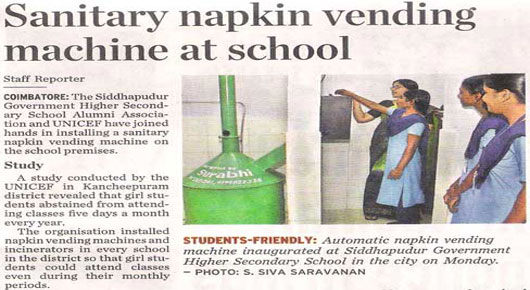
(newspaper scan courtesy Visaga,
India, www.visagatech.com)
"*A
Revolution in Personal*
*Hygiene*" in India
To Museum of Menstruation
Respected Sir / Madam,
*Visaga Techno System*,
Coimbatore, has launched
innovative products in India
keeping in mind the health and
hygiene factors which are the
pillars of good living. The
products are *"Napivend"-- A
Sanitary Napkin Vending Machine
*which vends quality
napkins and another is a *Compact Electric
Incinerator* for the disposal of
used Napkins. We
introduce ourselves with these
unique products. The designing and
manufacturing is done under the
guidance of *UNICEF Chennai.*
* UNICEF
* along with Government officials,
Collectors and NGOs work towards
creating awareness of need to use
Sanitary Napkins & need for
proper disposal of used napkins in
rural areas.
*'Napivend'* is a compact unit
which can be wall mounted and has
whole day battery back-up. When
coins are dropped inside, a
Sanitary Napkin comes out. There
is a glass panel to see the napkin
status. The machine works on
Microprocessor Control. The
Capacity of Sanitary Napkins in
the machine varies from model to
model. It ranges from 20, 40, 60
& 100 Napkins. Sanitary Napkin
Vending Machine can be implemented
in areas like:
*Rural Areas* - Government
hospitals, schools, girls hostels,
public toilets, primary health
centers, etc.
*Cities* - Schools, colleges,
railway & bus stations,
hospitals, ladies hostels, toilets
of highway petrol bunks , shopping
malls, etc.
Installation of Sanitary Napkin
Vending Machine and Electric
Incinerator with the help of
UNICEF has been done & is
still in process in several
Schools, Colleges, Mills etc. ...
in various districts of Tamil
Nadu.
Used napkins can be disposed
scientifically by an *Electric
Incinerator*which can destroy 100
napkins in a day, with periodic
settings. It is compact in size.
We also take necessary measures
to help in training the SHGs in
the production of Sanitary Napkin
at low cost. The Vending machine
helps the SHGs Napkins reach the
end-user directly by benefiting
the manufacturer.
We will be honored if you can
render us help in implementing
this project
*A
Revolution in Personal*
*Hygiene*.
We look forward for a favorable
reply at the earliest of your
convenience.
http://www.hindustantimes.com/StoryPage/StoryPage.aspx?section
Name=NLetter&id=b5a23199-9f3d-4af5-9889-56da021179a5&
Headline=Unicef+scheme+vends+girls%92+education+dreams
Thanks & Regards
Ms. Parimala
Marketing Co-ordinator
*VISAGA TECHNO SYSTEM*
1373 - A, Jeya Shanthi Towers,
III Floor, Sathy Road,
Ganapathy,
Coimbatore - 641 006, TN, India.
Tel: + 91 - 422 - 4376373
Fax: + 91 - 422 - 4376560
E mail : sales@visagatech.com
(See also MUM's India and
menstruation stories, one
featuring an Indian woman
supported by the MacArthur
Foundation, the other
with information from the U. S.
A.'s Center for Health and
Gender Equity. And see the article below.)
The Times of India invents a
quotation from me
A writer for The Times asked
me to comment on the recent
publication of My Little Red
Book, a book of women's
first menstrual experiences
edited by Rachel Kauder Nalebuff
that I think is a good thing.
But I never said the long
quote attributed to me in The
Times writer's article, a jumble
of ideas picked up and shaken
from this MUM Web site and an
e-mail I sent her in all
innocence and good faith. She
later apologized for some of it
but never changed the wording in
the article.
How much
of the rest of her article is
fiction?
Beware when talking to anyone
in the media or writing a book
when they have an axe to grind.
The writer took some of her
material from this museum's two
articles about India and
menstruation, one
featuring an Indian woman
supported by the MacArthur
Foundation, the other
with information from the U. S.
A.'s Center for Health and
Gender Equity. Both are about
changing some of India's ways,
which the article opposes.
Read
The Times of India article.
She comments on Intelligent
Design, childbirth, and boric acid
Yes, boric acid is a poison
[she's writing about Zephies
tampon], however it can be
used as a vaginal suppository
(by putting it in a capsule and
inserting it) for yeast
infections. I had never heard of
it until about a month ago,
reading a Dr Mercola's website.
Following is the quote:
"Inserting one Boric acid
powder capsule morning and
evening for three to seven days
for an acute infection, and 14
to 30 days for a chronic
infection. I have not seen Boric
acid capsules widely available
in health stores or pharmacies
but women can make their own by
buying a bottle of Boric acid
powder and gelatin capsules (a
capsule-making machine makes the
process go faster). Studies show
the effectiveness of Boric acid
is very high especially in women
with chronic resistant yeast
infections--one study with 100
women showed a 98 percent
success rate with this
condition. If you find that the
Boric acid irritates your
external genitalia you can
protect the tissue with vitamin
E oil (preferred) or Vaseline."
Here is the link:
http://articles.mercola.com/sites/articles/archive/2004/04/07/yeast-infections-
part-two.aspx
Found your site interesting.
One comment I read by another
contributor (paraphrased): "A good
argument against intelligent
design [definition] is that an
intelligent designer would not
have made childbirth so hard [the
comment is here, next-to-last
paragraph of the text]" obviously
has not read the Bible as to
WHY childbirth is so hard.
Genesis 3:16 (New King James
Version) To the woman He said: "I will
greatly multiply your sorrow
[menstruation?] and
conception; In pain you shall
bring forth children; Your
desire shall be for your
husband and he shall rule over
you."
More appropriately, I think a
woman's physical makeup proves
that there IS an Intelligent
Designer, because
there is no physiological
reason for labor to be
painful, or for childbirth to
hurt (with the
exception of IF the perineum is
torn.)
Interesting site though.
January 2009
Somebody likes MUM!
Dear Mr. Finley,
I just came across the MUM
website and found myself
fascinated, amused and feeling
very appreciative to find it. I
wanted to write and say thank
you for creating this
informative, humorous, unashamed
website.
Actually, an argument I had
with my longtime boyfriend was
the impetus for my stumbling
upon the MUM website. Wonderful
as he is, my boyfriend,
unfortunately, is still
squeamish about any evidence of
my menstruation. It's so
tiresome and I try to get him to
hear that I do not want to feel
shamed by him about a natural
process-- and one that is
essential to the continuity of
life!
Imagine my surprise to learn
that MUM was created by a man!
Bless you for your perseverance
and curiosity. [I've been
assailed for both virtues and
for the sin of being male.
Thanks!]
I will share the site with my
friends and look forward to
revisiting it regularly. I'm
even going to try to get my
boyfriend to take a look.
Sincerely yours,
****
|
Collecting, Collectibles, Collectors,
Collections
30th Annual Meeting of the
Southwest/Texas Popular
&
American Culture Association
Feb 25-28, 2009
Hyatt Regency
Albuquerque, New
Mexico
Proposals are being accepted for the
Collecting, Collectibles, Collectors,
Collections Area.
All proposals are welcome. We are especially
interested in papers that address the
following areas:
* the intersections between
literary/filmic/photographic techniques of
exhibition and curation and those of museums
* the intersections between professional
and popular archival forms as expressed
through any medium
* the archiving and exhibition of Native
American, African-American, or immigrant
populations as addressed in literature,
film, or museums
* the relationship between
civic/professional collections and private
collections
* postmodern museums/collections and the
role of the visitor
Scholars, artists, curators, and other
professionals are encouraged to participate.
Graduate students are welcome, with award
opportunities for the best graduate papers.
Please visit the organization
website for more information about
this conference.
http://www.swtxpca.org
Send 200-250 word abstracts or proposals
for panels by 20 October 2008 to Elizabeth
Festa, email: eaf2@rice.edu
Elizabeth A. Festa, Ph.D.
Program for Communication Excellence
Rice University MS 630
PO Box 1892
RMC Chapel Reading Room
Houston TX 77251
713-206-6885
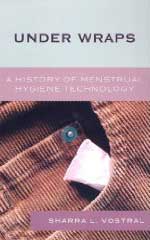 |
Under Wraps: A History of
Menstrual Hygiene Technology
(Hardcover, Lexington
Books, 2008) by Sharra L. Vostral.
$65.
From the publisher's Web site:
"Under Wraps is a valuable
addition to our understanding of
gender, technology, and consumer
culture." - Linda Layne,
Rensselaer Polytechnic Institute
Menstruation provides one of
the few shared bodily functions
that most women will experience
during their lifetimes. Yet,
these experiences are anything
but common. In the United
States, for the better part of
the twentieth century,
menstruation went hand-in-glove
with menstrual hygiene. But how
and why did this occur? This
book looks at the social history
of menstrual hygiene by
examining it as a technology. In
doing so, the lens of technology
provides a way to think about
menstrual artifacts, how the
artifacts are used, and how
women gained the knowledge and
skills to use them. As
technological users, women
developed great savvy in
manipulating belts, pins, and
pads, and using tampons to
effectively mask their entire
menstrual period. This masking
is a form of passing, though it
is not often thought of in that
way. By using a technology of
passing, a woman might pass
temporarily as a non-bleeder,
which could help her perform her
work duties and not get fired or
maintain social engagements like
swimming at a summer party and
not be marked as having her
period. How women use
technologies of passing, and the
resulting politics of secrecy,
are a part of women's history
that has remained under wraps.
About the Author:
Sharra L. Vostral is an
assistant professor of gender
and women's studies and history
at the University of Illinois,
Urbana-Champaign.
|
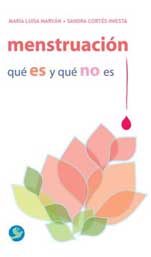 |
Menstruación:
qué es y qué no es
(Menstruation: What it is and what
it is not) (Paperback,
Editorial Pax Mexico, to be
published Oct
28, 2008) by Maria Luisa
Marvan and Sandra Cortes-Iniesta.
$15.
From the Amazon.com Web site:
By analyzing the medical facts
and history of menstruation, the
authors attempt to eliminate the
taboo that surrounds this
biological process. With this
guide, readers will develop an
understanding of the attitudes
and myths associated with
menstruation, premenstrual
syndrome, and menopause. Also
featuring a humorous section of
comments, opinions, and jokes
about menstruation, this
resource is helpful for parents,
teachers, and medical
professionals.
Analizando los hechos
médicos y la historia
del la menstruación,
las autores tratan de disolver
el tabú que rodea a
este proceso biológico.
Con esta guía, los
lectores fomentarán la
comprensión de las
actitudes y los mitos
asociados con la
menstruación, el
síndrome premenstrual y
la menopausia. También
incluyendo una sección
de humor con una serie de
comentarios, opiniones y
chistes sobre la
menstruación, esta
guía es ideal para los
padres, maestros y
profesionales médicos.
About the Authors:
Maria Luisa Marván is
a psychologist who has published
numerous articles on the subject
of menstruation. Sandra
Cortés-Iniesta is a
professor of clinical psychology
who specializes in the
psychology surrounding
menstruation.
|
Call for Abstracts: Embodied
Resistance: Breaking the Rules
in Public Spaces
Co-Editors: Chris Bobel,
University of Massachusetts
Boston and Samantha Kwan,
University of Houston
This edited collection will
assemble scholarly yet
accessibly written works that
explore the dimensions of
resistance to embodied taboos of
all sorts. We are interested in
pieces that describe and analyze
the many ways that humans
subvert the social constraints
that deem certain behaviors and
bodily presentations as
inappropriate, disgusting,
private and/or forbidden in
various cultural and historical
contexts. Empirical, historical,
theoretical and narrative
contributions are equally
welcome.
This book, intended as a
supplemental text for use in
undergraduate and graduate
classrooms, aims to advance and
deepen our understanding of the
motivations, experiences and
consequences associated with the
bodies that break the rules
through the (intersecting)
lenses of gender, race,
ethnicity, sexuality, culture,
religiosity, class and nation.
The editors welcome submissions
from scholars in a range of
disciplines, including but not
limited to sociology, women's
and gender studies,
anthropology, science studies,
cultural studies, literary
studies, disability studies,
psychology, and history. We
especially encourage scholarship
which focuses on areas outside
the US and the West.
Possible topics include, but
are not limited to, practices
that challenge:
- Traditional attire norms,
e.g., older women who do not
"dress their age," fat women who
"show skin," and parents who
refuse to dress their children
in traditional gender attire
- Conventional hair and body
norms, e.g., women who
conspicuously do not shave,
youth who experiment with hair
colors and cuts, and individuals
with numerous and various forms
of body art
- The binary construction of
gender, e.g., various practices
and performances by individuals
who identify as transgender,
queer, or metrosexual
- Biological processes
considered contextually taboo,
e.g., mothers who conspicuously
breastfeed in public and women
who do not hide the fact of
their menstruation
- Physical conditions that
carry stigma, e.g., cancer
patients who do not conceal
their hair loss, people with
HIV/AIDS who speak openly about
their infection status, and
intersex individuals who
publicly discuss their condition
- Cultural, religious, and/or
ethnic norms, e.g., Muslim women
who wear hijab in spite of
policies or laws that forbid
veiling and Falun Gong
practitioners who meditate in
public demonstrations
SUBMISSION PROCEDURE: We invite
authors to submit an abstract on
or before December 19,
2008. Submissions
should take the form of a
250-500 word abstract outlining
the intent and scope of the
paper, and where appropriate,
author's theoretical, empirical,
and/or methodological framework.
Authors will be notified by
February 13, 2009 about the
status of their proposal. Full
papers are expected by May 29,
2009.
Please direct inquiries and
submissions to BOTH editors
at:
Chris Bobel
chris.bobel@umb.edu
Samantha Kwan sskwan@uh.edu
Play an Australian TV program
discussing ads for menstrual
products, including swimming in blue
water, and, um, beaver
Dear Harry,
A recent program, episode 6,
2/7/2008, of "The Gruen
Transfer" on ABC TV,
would be of interest to your
audience [heads up: it's a 90 MB download]:
http://www.abc.net.au/tv/gruentransfer/download.htm
It features TV advertising
of women's sanitary products
and is subtitled: feminine
hygiene; the things with strings
and the things with wings! The
commentary is lively, making fun
of the language used to
advertise these products. There
are a lot of euphemisms and
symbolism around this issue. No-one is
willing to be frank on public
TV. Some of the ads
play on embarrassment, double
meanings and timing give the
advertising humour.
It was
unfortunate that the panel
consisted of only one woman
and four men! The men,
to their credit, do show a
lively interest. I love the
suggestion that tampons should
come wrapped within a kinder
surprise! I wanted to see a
young woman's opinion. The
advertisements are aimed at
young women, and it would have
been interesting to know how
young women react to these
issues. Are there different
attitudes with the different
generations? Are young women
more free and open, or are they
trying to hide all the evidence
of menstruation as past
generations did? How does
menstruation fit in with their
lives? Do they have different
needs and expectations of the
products because of their
different stories, adventures
and experiences?
I did enjoy the humour and
suggest your web friends watch
it.
Margaret Kalms
artofwoman.com.au
See her art on MUM.
See more
about BLUE in
menstruation and SHAME. And HUMOR.
(from
America)
Sambo Adams
"When I was in 5th grade, we
referred to periods as Sambo Adams.
I don't know who thought this up
or why."
(from America)
Mr. Y'know
Mortimer Menses
Menstruos
Ovulatoes
"In high school, my friend
called her period 'Mr. Y'know.'
He would visit 3 other girls the
rest of the month, and sometimes
he'd get caught up, which is why
he was sometimes late. My period
is named Mortimer
Menses. He doesn't
visit anyone else, which is why
he's almost always a little
early. He travels the world in
between. My
boyfriend said that
anthropomorphizing my period
will make it sad when I go
through menopause. He's
probably right. Big blobs of
menstrual fluid are menstruos
and those globs of vaginal fluid
you get when you're ovulating
are ovulatoes.
I guess you should leave me
anonymous, to keep my friend's
identity anonymous. Thanks!"
(from China)
M
Auntie/Mother's eldest
sister/Senior Aunt
That thing
Unclean/dirty thing
"Hi, First of all, I want to
thank you for setting up such an
informative and fascinating web
site. I enjoy browsing through
it a lot! I also want to
contribute a little to the list
of expressions for menstruation
on your website. In Hong Kong
(where most of us speak
Cantonese instead of
Mandarin/Putonghua like in the
rest of China), we often use the
letter 'M'
as an euphemism for period, as
in 'M napkins', 'M pain', 'My M
has come'. I'm pretty sure the
letter stands for
'menstruation'. The expression 'Auntie/Mother's
eldest sister/Senior Aunt'
(same characters as 'Da Yi Ma'
in Mandarin, but in Cantonese we
pronounce them as 'Daai Yi Ma')
seems to be growing out of
fashion and is not much used by
young people anymore. My mother
used to refer to menstruation as
'that
thing' (e.g. 'Has that
thing of yours come?'), and when
she talks to my grandma she
would usually call it 'unclean/dirty
thing', as in 'I think
her dirty thing has cleared' (=
'I think her period has ended').
I hate the expression, because,
well, it makes me feel dirty. I
hope this rambling e-mail would
be of use to you :) ****"
Is it right to tax menstrual
products? Write her!
HI, I'm writing to you because
I thought you might know of resources
for what I'm seeking to do.
I remembered having heard of
your website a year or two ago,
as I was reading on women's
health, and especially
menstruation and the
political/social culture. It
never occurred to me to look
before, but recently I noticed
that New
York State charges sales tax
on sanitary napkins, tampons,
etc., which to me is
ridiculous. For women, these
items should be in the same
category as food, medicine,
etc. and it's also
discriminatory, since women
for the most part will be the
only ones affected by it.
Though I would also think that
men who buy on behalf of their
wives, mothers, girlfriends,
daughters, etc. would appreciate
the savings as well.
Do you
have any knowledge of any
groups working on this? I've
already written to my elected
representatives at the state
level, but as unglamorous as
this may seem, it really seems
like an obvious "wrong."
Thank you.
Jennifer Fisher
write her
at
hagarthefirst [at] yahoo [dot]
com
See
a wondrous event: the
first clear pictures of
a human egg
leaving the ovary
|
|
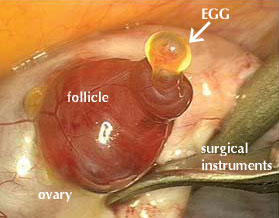
Modified from
NewScientist online
|
"[T]he event [was
captured] by accident
while preparing
to
carry out a partial
hysterectomy on a
45-year-old woman.
The release of an egg
was considered a sudden,
explosive event, but
[the] pictures, to be
published in Fertility
and Sterility,
show it taking place
over a period of at
least 15 minutes.
"Shortly before the egg
is released, enzymes
break down the tissue in
the mature follicle, a
fluid-filled sac on the
surface of the ovary
that contains the egg.
This prompts the
formation of a reddish
protrusion, and after a
while a hole
appears, from which
the egg emerges,
surrounded by support
cells. It then enters
a Fallopian tube,
which carries it to
the uterus." (Article
and
more pictures in
NewScientist.)
|
MacArthur Award winner says yes,
the moon
influences menstruation -
but how?
"Somehow, however, the moon
does have an effect on human
beings--at least on women.
Menstruation typically occurs on
the 28 day lunar cycle. And even the phase
of the moon matters. In
a study of 826 women [what
study?], 28 percent began
menstruating during the four
days around the new moon,
whereas no more than 13 percent
did so during any other four day
period. This
puts the peak of ovulation at
the full moon. (Could
this provide an evolutionary
explanation for the romantic
associations we have with the
moon? I'll leave that to Robert
Wright, Slate's resident
Darwinian, to sort out.) How
this happens is baffling. The
lone hypothesis I've found
proposes that the moon generates
tidal
forces on the 50 percent to 60
percent of our bodies that is
water. But that only
raises more questions--such as
how tides are supposed to make
women menstruate." (From E.R. [the emergency room in a
hospital] and the Triple
Hex: When a full moon and a
lunar eclipse collide with
Friday the 13th, do more
accidents really happen?
By Atul Gawande in Slate. Dr.
Gawande belongs to the staffs of
Brigham and Women's Hospital,
the Dana Farber Cancer
Institute, Harvard medical
school, and The New
Yorker magazine. See an early chart showing the coincidence
of ovulation and a woman's
sexual feeling and physiological
responses.
Do you like
these ads?
Dear Museum Curator:
Please take a look at:
http://www.3iying.tv/
Especially some of the videos
there.
Ads 2, 5, 14, 32. Note that
being "Flipped"
means being turned off by one
reason or another by an ad. The
reasons are explained for each
ad.
It appears the white
pants/shorts in menstrual ads
actually turns off some women as
being unreal.
Please refer to me only as
"Mike H."
Letter about burning used
menstrual pads in the old
days (and today),
bleeding into your clothes, etc.
I was reading about traveling
and disposal in the old days,
[and here]
it mentioned burning pads in the
fireplace of the place the woman
was staying. I recall there
being a rest stop in the
interstate between Richmond,
Virginia, and the North Carolina
state line which had a furnace
system. At the back of the
cubicle was a door which opened
and you dropped whatever into
the furnace. A way to keep the
place clean and warm (and keep
the pipes from freezing) all in
one! Though I must say, not so
much a feature in July.
Unfortunately for the museum's
purposes, it was remodeled
sometime in the 90's and it
never occurred to me to take a
picture. Well, it was just a
little door on the wall--not
photogenic.
Oh, you should read Call the
Midwife by
Jennifer Worth, her memoir of
midwifery in East London in the
early 50's. Many of the women in
the area were still living life
the same way as their mothers
they were living in the same or
only slightly better conditions:
Victorian tenement, originally
no water or toilets except in
the courtyard, modernized to
have one
cold water tap and one toilet
per floor, serving hundreds of
people.
One patient hadn't had a
period since her first pregnancy
began, as near as the midwives
could determine (the woman did
not speak English). Possibly
never, as Conchita had come home
with her husband from the
Spanish Civil War as quite a
young girl, prepubescent even.
She didn't know her own age. Determining
how pregnant she was was
always a problem, because she
always managed to get pregnant
again at the first
opportunity! This woman
also managed to care for her
extremely premature infant,
around 28 weeks as near as they
could tell, her 25th pregnancy,
and not her last!
Worth also comments on the dramatic
results of the introduction of
the
Pill: "In the late 1950's
we had eighty to a hundred
deliveries on our books. In
1963, the number had dropped to
four or five a month!
Now that is some social
change!
It is a fascinating book.
About bleeding
into your clothes, I'm so
glad the retired
teacher wrote in. Given
the inconvenience of getting
your clothes dirty, that
menstrual blood could be taboo
and ought not to be dripped all
around in that sort of
community, and that as far back
as ancient
Egypt tampons were used,
it makes sense that at least
some women of some classes did
catch the blood. On the other
hand, women wore multiple layers
of petticoats in many eras, so
that may have prevented a lot of
staining and mess.
Here in the UK, both sanitary
napkins and baby nappies
(napkins) being the same word
makes me wonder that the clothes
might have been used for both
purposes? at least some of the
time [diaper
cloth was used for
menstrual pads in the U.S.A.].
Although diaper use also varied
by class and age of the baby:
the midwife tells of some of the
poorest mothers still keeping
toddlers undressed below the
waist and their tenement rooms
and furniture being piss and
poo stained as a result.
But with laundry being almost an
impossibility, and many of these
women so uneducated as to be
primitive, and chamber pots
still in use because the one
toilet, if it worked, was not
always available, it was a
reasonable way to deal with
toilet training.
Better off women, like
Conchita, above, did diaper
their children. Conchita had a
big pot in which she boiled
laundry all day, and made vast
quantities of pasta (eaten from
a communal bowl) each night for
her family of 25+. Laundry was
hung indoors over and from every
possible surface.
These points apply to millions
of women today.
It's possible that women
attained adulthood and gave
birth to children, but never
menstruated [which in past times
could mean that menstruation was
rare, thus catching many women
by surprise who had not worn -
or never wore - anything special
for menstruation, thus bleeding
into their clothing. Remember that
body odor, including probably
menstrual odor, was much
stronger and common in the
past among Europeans and
Americans - and bathing was
often considered unhealthy.
Teeth were bad, breath smelly,
and people wore perfume to
avoid having to smell other
people!].
****
New Words
and expressions about
menstruation from the United Kingdom
Dear Mr. HF,
I found your site while
researching cups for a
particularly long road trip my
partner and I are planning.
Although I haven't really
looked around much (been "stuck"
on the euphemisms
page for ages!), I think
it's a brilliant resource for
first-timers and golden oldies,
alike, so well done you.
My partner and I would like to
contribute a euphemism or two.
He came up with "The old Red
Rose." Rose being another word
for vagina.
Also, I know of "Red Rum. Red
Rum." from Stephen King's The
Shining, red being an obvious
reference to blood, and it's
also very fitting of a girl's
desire to commit murder at those
times! Plus the river of blood
on the stairwell always reminds
my of my Womanlies!
I just wanted to share a
little story also, because I
think your site has just solved
a decade's old mystery for me.
I used to travel by bus to
school, and one day a "friend" -
I say "friend" because she was
quite obviously trying to set me
up to look foolish in front of
the older girls - invited me to
sit on the prestigious back
seat.
So then she proceeded to
bombard me with questions about
sex and periods, one of which
was "Can/Do
I come in a car?"
Now, knowing that no matter
what I said, I was probably in
for some sort of ridicule, I
replied very carefully, "I go to
school on a bus."
Peels of laughter ensued, not
sure whether in reference to the
"B.U.S." [see the American
section of expressions],
or because it was completely
obvious that I had no clue what
was being asked really.
Having read through most of
your Words for Menstruation
page, I think I have finally
worked out, that they were
asking if I had sex while on my
period. I saw the phrases:
"Granny came in a red Ferrari,"
and "My Aunt parked her red
Porsche outside" [both in the
South Africa section of expressions];
and it finally clicked into
place.
Obviously, being almost 30
now, I've since lost touch with
said 'friend' and can't - not
sure I would, if I had the
chance either - ask her what she
meant, but maybe someone else
has some idea of what "Come in a car"
actually means [E-mail
if you know].
Thanks for helping me while
away a red afternoon,
****
28, Hampshire, UK.
When do Australians say "girl"?
I have been thinking about
your question regarding the use
of the word 'girls' in
Australian ads and culture.
Particularly that it wouldn't be
appropriate in America. Um, that
is a hard question so I will
bring it back to myself. I am 24
(female Australian) and call
myself a girl sometimes. I also
will call my guy friends boys
and used to call out 'Boy' when
I wanted to get my boyfriends
attention and he is four years
older than me.
Women calling each other girls
is acceptable and connotes an
intimacy and a recognition that
we're still young at heart, even
aged 80. I would sometimes call
my workmates, ladies in their
mid to late fifties 'girls' as a
way to show that I don't
consider them old. However, it
would not be polite for our male
employer to call them 'girls.'
He should call them ladies.
Australia is a deeply
conservative and class-based
society; middle-class feminists
might want to be called women
but respectable working class
women are girls or ladies or
women, regardless of their age.
So partly it has to do with age,
partly familiarity and partly
respect. 'Girls' in Australian
culture means women who are
still young enough to have fun.
Yet 'boy' doesn't usually apply
to men over the age of 30 unless
you are talking ironically about
'boys' toys' (power tools,
computer games, cars, etc.) It
is about context; in a women's
mag, using the term 'girls'
would connote that we are in on
something, part of a private
group of friends.
Another example of Australian
English is the term 'Not Bad'
which despite its unenthusiastic
sound, is actually high praise.
I love your website by the way,
it is definitely not a bad
effort, Harry. Thanks for your
courage and dedication in
running it and making the
information available to all us
interested girls.
She later added:
Also, on conservative, by that
I mean gender role stability.
Men work, women raise children -
women work too, but when they
work they do still do two thirds
of the housekeeping and
childcare. It is, I think, more
acceptable in Australia for
people to cohabit prior to or
instead of marriage and
apparently cohabiting prior to
marriage allows for more
negotiating of who does the
housework (women still do more,
though). Women worry about being
seen as good mums, but men don't
usually worry about being seen
as good dads. It seems to me
that Aussie men are quite happy
and supportive of their women to
work, as long as the men still
get looked after. Australian
women are very strong and
independent ('it has to be done,
somebody's got to do it, it may
as well be me'). As a nation we
are generally broadminded
(except when it comes to race
and racism which is somewhat
entrenched in the dominant
Anglo-Saxon culture), that's why
your menstruation museum will be
welcomed to the Powerhouse
Museum [in Sydney. Read more.]
By the way I am an
undergraduate B. Social Science
student on a campus that is
absolutely full of international
students.
****
P.S. For a test of my
theory you could email the
Australian Women's Weekly
magazine [I did] and see if
they will run a short feature
on your website - particularly
regarding the eventual move to
the Powerhouse Museum.
See
menstruation products ads on
YouTube
Hey Mr. Finley,
I have set up a channel on
YouTube dedicated towards pads,
tampons, and menstruation. Right
now I am uploading one pad
commercial per day. Right now I
have 25 commercials, and two
commercials of pad
manufacturing. I was wondering
if you could mention my channel
on your website. My youtube
channel is
Please let me know.
Thanks,
Brandon Gardner
Two e-mails adding words and
phrases about menstruation
(complete
list)
[From Canada] My SIL and I
use the term "TNSFF"
instead of saying we are on
our periods. I know it doesn't
roll off the tongue but you
get used to it. When we were
in college, there was a
commercial in Canada and
probably the U.S., as well. It
was for a feminine hygiene
product, possibly a douche or
something. I can't remember
now. Anyway, a daughter and
her mother are sitting outside
and the daughter asks her mom
if she ever gets That Not So
Fresh Feeling ---
TNSFF. There were a whole
group of us that used this
term because we all hated that
commercial so we basically
made fun of it by saying we
were having that not so fresh
feeling and it eventually got
shortened to the initials.
[See what
happens when you're not
so fresh!]
"What a bloody mess!"
"Shark bait"
"Chumming the waters"
"Dying the beard red"
"I'm a ragdoll."
Actually a friend of mine
and I would sing the Aerosmith
song "Ragdoll," except we
would change the words:
Ragdoll
feeling kind of moody!
Ragdoll
bleeding from my booty!
Ragdoll
never had cramps like THIS
before!
Also, we worked in a large
single room office and we'd
call attention to any woman
who might be on her period by
loudly asking,
"Where are you going with
your purse? Why are you taking
your purse to the bathroom?"
Yes, someone saw the pancake-uterus
video (see the e-mail
below this one)!
I saw that movie in 1995
when I was in the fifth grade.
It's called "I Got It!" I
remember this because the
opening scene is a girl
yelling, "I got it! I got
it!"- referring to the slumber
party invitation, and was an
embarrassing in-joke for us
that whole next month. I've
found a few things online that
suggest it was a 1988
production maybe made by
Always. Sadly, I remember
absolutely nothing else about
this video except that I was a
little frightened that I could
just wake up in the middle of
the night and discover this
thing had happened to me!
(Because, you see, I imagined
it to be like wetting the bed,
only worse because blood
stains.)
I just wish it had left a
more positive, meaningful
impact on me than the
weirdness of your best
friend's mom getting way too
creative with the pancake
batter and a fear that this
could happen totally without
warning. When I found "Molly
Grows Up" online a while ago,
I thought that it actually did
a much better job of
presentation, even if some of
the information is antiquated.
Hope this helps with her
paper!
Has anyone seen the
pancake-uterus video?
This is going to sound strange,
but I'm also looking for
information about the video
where the mother makes a pancake
in the shape of a uterus to
explain menstruation. I'm
currently writing a graduate
paper about shame surrounding
physical development during
puberty. Several of my friends
reported seeing this video in
the 80s in Wisconsin and I'm
including the anecdotes in my
paper. Have you gotten responses
about the title? I'm searching
the internet and have found
references to it several places,
but no actual title.
Thanks! (E-mail
me if you have and I'll
pass it on,)
"Certain Oral Contraceptives
May Pose Health Risks, Study
Suggests
"ScienceDaily (Mar. 11,
2008) - The widely used
synthetic progestin
medroxyprogesterone acetate
(MPA) decreased endothelial
function in premenopausal women
in a study done at the
University of Oregon. The
finding, researchers said,
raises concerns about long-term
effects of MPA and possibly
other synthetic hormones on
vascular health in young women."
More.
"Structure Of Brain Receptor
Implicated In Epilepsy And
Pre-Menstrual Tension Determined
"ScienceDaily (Mar. 11,
2008) - Scientists have
identified the structure of a
receptor in the brain implicated
in conditions such as epilepsy
and pre-menstrual tension. The
same receptor has also been
reported to be highly sensitive
to alcohol." More.
Letters
CONTINUED
|
© 2012 Harry Finley.
It is illegal to reproduce or
distribute work on this Web site
in any manner or medium without
written permission of the
author. Please report suspected
violations to hfinley@mum.org
|
|